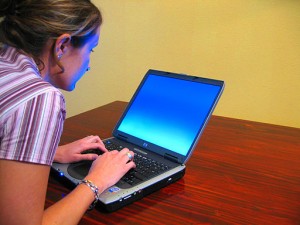
Obama Urges e-Textbooks for All Students by 2017

The Obama administration announced they want every student to have an e-textbook by 2017. In an effort to speed up the process and reach the 5-year goal, Federal Communications Commission Chairman Julius Genachowski and Education Secretary Arne Duncan want states to modify their textbook adoption process by allowing K-12 schools to use taxpayer funding to purchase iPads, Kindles, and other e-readers, as well as software, according to USA Today.
Read the rest of this entry »

Share this Article with Your Friends:
  • Print
  • Digg
  • StumbleUpon
  • del.icio.us
  • Facebook
  • Yahoo! Buzz
  • Twitter
  • Google Bookmarks
  • LinkedIn
  • RSS

Computers Won’t Revolutionize Learning Without Improved Learning Environments

Many educators and authors are anxious to see if Apple’s new iBook2 will be the technology that revolutionizes the way a new generation learns. The iBook2 is a free app for the iPad that allows anyone to author a textbook and hopes to make textbooks more available to students with the maximum textbook price set at $14.99.
Read the rest of this entry »

Share this Article with Your Friends:
  • Print
  • Digg
  • StumbleUpon
  • del.icio.us
  • Facebook
  • Yahoo! Buzz
  • Twitter
  • Google Bookmarks
  • LinkedIn
  • RSS

Pros and Cons of Early Graduation from High School

Could getting students out of high school earlier be beneficial to higher education and to the students themselves? More and more states think the answer is yes. An increasing number of states are encouraging students to take college courses or graduate early in hopes to bypass the senior slump, save families college tuition money, and curb the school districts’ instructional costs, according the the article “Some States Prodding Students to Graduate Early.

Share this Article with Your Friends:
  • Print
  • Digg
  • StumbleUpon
  • del.icio.us
  • Facebook
  • Yahoo! Buzz
  • Twitter
  • Google Bookmarks
  • LinkedIn
  • RSS

How More High School Graduates Can Power Our Economy

Dropping out of high school doesn’t only effect the individual. While students who drop out of high school will personally have less chances of employment, make lower incomes, and are most likely just a piece in the poverty cycle, they also represent a huge drain on our economic potential. On a larger scale, high school graduates and dropouts shape our economy, define the abilities of our workforce, and set the stage for our leaders of the future in business, industry, and government.

Share this Article with Your Friends:
  • Print
  • Digg
  • StumbleUpon
  • del.icio.us
  • Facebook
  • Yahoo! Buzz
  • Twitter
  • Google Bookmarks
  • LinkedIn
  • RSS

What Are The Long-term Effects of the Digital Divide?

Yesterday, I wrote on finding a balance between digital and traditional teaching. There were also two articles I came across touching on the same subject, one debating whether handwriting is still a necessary skill to teach in the 21st century classroom, and the other debating whether blogging should replace writing a formal research paper.

Read the rest of this entry »

Share this Article with Your Friends:
  • Print
  • Digg
  • StumbleUpon
  • del.icio.us
  • Facebook
  • Yahoo! Buzz
  • Twitter
  • Google Bookmarks
  • LinkedIn
  • RSS

The new generation of teaching with technology

As more students are required to own a laptop, iPad, Kindle and other electronic devices for school, a debate has opened between educators and parents on whether technology in the classroom is harming or enhancing the learning environment. On one hand, parents and educators are concerned with possible long-term side effects, like vision problems and neck strain from leaning over devices. On the other hand, parents and educators support the use of integrating technology into the lesson plan to give students computer skills they will need in the working world.

In yesterday’s post, “New College Grads Create Their Own Jobs in Bad Economy,” we discussed the rising trend of young, digital-minded graduates becoming entrepreneurs in a competitive workforce. The next working generation, and those that follow, are at an advantage because they are — in Anthony Salcito, vice president of Microsoft Education’s words — “digital natives.” They are wired to create new jobs with virtual creativity, work on a virtual team, communicate through online networks, and send and receive information at top speed.

When parents want to get involved in the student’s life, technology can be seen as a barrier from allowing that to happen. Just like any other tool used in the classroom, technology has a time and place. Use computers to teach basic computer skills, like word-processing, research and email. Prepare a lesson using hands-on materials, like paper or props and enhance it with a video or other digital media. Parents and educators shouldn’t feel threatened by technology in a student’s education. Technology is the tool to keep students current and prepared with skills for higher education, career and life.

– Read the referenced article “The Great Parenting Debate: Should School Kids Rely on Computers?” at foxnews.com

Share this Article with Your Friends:
  • Print
  • Digg
  • StumbleUpon
  • del.icio.us
  • Facebook
  • Yahoo! Buzz
  • Twitter
  • Google Bookmarks
  • LinkedIn
  • RSS

The bleak future of financing for Pell Grants: 3 tips on how to manage your money

A new Congress is taking over in January that has college students worrying over a possible 15% cut to their Pell Grant awards. The amount a student receives from the Pell Grant Program is determined by their status as a full- or part-time student, their financial needs, and the costs to attend their school. Grants make it possible for low-income or unemployed students to earn a degree when they otherwise could not financially commit.

Read the rest of this entry »

Share this Article with Your Friends:
  • Print
  • Digg
  • StumbleUpon
  • del.icio.us
  • Facebook
  • Yahoo! Buzz
  • Twitter
  • Google Bookmarks
  • LinkedIn
  • RSS
Email Newsletters with Constant Contact